Aluminum melting furnaces commonly operate under extreme conditions, which required refractory linings to withstand high temperatures, chemical reactions, and mechanical stress. Refractory castables play a vital role to make sure the lining durability, energy efficiency, and resistance to molten aluminum. This chapter explores the application, selection, installation, and maintenance of refractory castables in aluminum melting furnaces.
Choose Suitable Refractory Castable or Monolithics
To choose the appropriate refractory castable is essential for maximizing furnace service life. The selection is based on factors as below:
- Temperature Resistance : The material must withstand temperatures around 1200°C, depending on the furnace type.
- Chemical Corrosion Resistance: Good performance of resistance to molten aluminum, fluxes, and oxidation-reduction reactions is critical.
- Thermal Shock Resistance: The refractory should endure rapid temperature changes without cracking.
- Mechanical Strength: High abrasion and impact resistance are necessary for furnace lining service life.
- Low Porosity: To reduce aluminum penetration, prevent damage to the refractory lining.
Common refractory castables used in aluminum melting furnaces include:
- Alumina-based castables (High alumina and low cement concrete)
- Silicon carbide (SiC) castables
- Non-wetting castables to minimize aluminum infiltration
Application Areas in Aluminum Melting Furnace:
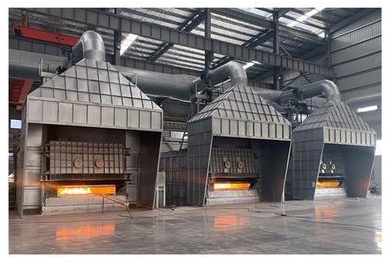
1. Roof and Walls: High-temperature resistant and thermal shock-resistant castables are used to handle heat exposure and mechanical stress.
2.Hearth and Ramps: Require abrasion-resistant and non-wetting castables to prevent aluminum penetration.
3.Door and Burner Blocks: Insulating and wear-resistant materials help maintain efficiency and durability.
4.Troughs and Launders: Need chemical-resistant, low-porosity castables to ensure smooth metal flow and reduce contamination.
Installation of Refractory Castable or Monolithics
The proper installation of refractory castable is crucial for performance and longevity. The main methods include:
- Casting and Vibrating – Used for forming monolithic linings, ensuring dense and uniform structures.
- Gunning – Suitable for repairs and quick applications, minimizing downtime.
- Ramming – Applied for specific areas requiring compact and high-strength linings.
- Shotcreting – Provides efficient installation with enhanced bonding and durability.